Hi All!
I decided to leave Blogspot. Check out my new blog here. I'll still keep this one up in cyberspace.
~Shannon Luders-Manuel
Monday, August 31, 2015

Saturday, August 15, 2015
My Response to Critics Regarding My For Harriet Article about Mixed Race Identity
On Wednesday, For Harriet published my article "What it Means to be Mixed Race During the Fight for Black Lives." It quickly took off and has received over 23,000 Facebook shares/likes by the time of this blog post. I'm extremely humbled and honored to be sharing the experiences and viewpoints of so many mixed race people. Today I took the time to read what some of the critics had to say about my article. Here is a general response to the ones that seemed the most common.
"Why is she using police brutality as a platform to discuss being mixed race?"
Response: When I wrote the article, I knew that many of my black and mixed friends were very personally upset by everything we have been witnessing on what is sometimes a daily basis. I felt that if I addressed my feelings about police brutality and racial aggression without discussing my mixed identity, some would say that my feelings weren't valid because I'm not a "real black person." I wanted to be honest about my mixed race vantage point while also doing the cleansing work of writing down my thoughts and feelings about what is weighing us all down right now.
"She thinks she's better than us by saying she has good hair."
Response: I don't personally subscribe to the notion of "good hair," which is why I put it in quotation marks. I think that when we elevate people based on Western definitions of beauty, it harms the beauty that lies within the black community. That includes black people who see mixed race people as desirable because of their Western features, and white people who see mixed race people as desirable because of their black features.
"So she only wants to claim blackness when black people are brutalized?"
Response: I claim blackness on a daily basis. If someone identifies as mixed race, it doesn't negate them also identifying as black. As simple as it may sound, a person cannot be a mix of things without being those things. I perhaps simplified it for the article as a way to express my sense of alignment with the black community in the wake of police brutality; however, I am proud to be black every day. That was something that was instilled in me both by my black father and my white mother.
"You're not mixed, you're black." / "You're not black."
Response: These were the two most common types of criticisms that I saw in the comments, and it reinforces the notion that mixed race people have to make their own identifiers. Many think that those who claim a mixed race identity are turning their back on black people, but what they don't understand is that many black people don't want to claim us because we don't look like they do. Often comments about how we "should" define is only argued after we "do" define, no matter what that definition is. I see it not as understanding or of wanting to claim this mixed race person, but rather as stating that the person doesn't have the right to claim themselves.
"Why is this important?"
Response: There's really no great way to explain this to someone who isn't biracial. The bottom line is, it isn't important at all. The only reason it becomes such a deep seeded and heated topic is because other people think it so important. If mixed race people were accepted for who they are, there wouldn't be a need to assert our identities. And like I said above, it's not a matter of what we assert but that we assert in the first place, which seems to get so many people upset.
I opened blogger to upload my video but ended up writing these responses instead! I guess I had a lot to say! For more information regarding my article and my stance, check it out below. And thanks for listening!
~Shannon Luders-Manuel
"Why is she using police brutality as a platform to discuss being mixed race?"
Response: When I wrote the article, I knew that many of my black and mixed friends were very personally upset by everything we have been witnessing on what is sometimes a daily basis. I felt that if I addressed my feelings about police brutality and racial aggression without discussing my mixed identity, some would say that my feelings weren't valid because I'm not a "real black person." I wanted to be honest about my mixed race vantage point while also doing the cleansing work of writing down my thoughts and feelings about what is weighing us all down right now.
"She thinks she's better than us by saying she has good hair."
Response: I don't personally subscribe to the notion of "good hair," which is why I put it in quotation marks. I think that when we elevate people based on Western definitions of beauty, it harms the beauty that lies within the black community. That includes black people who see mixed race people as desirable because of their Western features, and white people who see mixed race people as desirable because of their black features.
"So she only wants to claim blackness when black people are brutalized?"
Response: I claim blackness on a daily basis. If someone identifies as mixed race, it doesn't negate them also identifying as black. As simple as it may sound, a person cannot be a mix of things without being those things. I perhaps simplified it for the article as a way to express my sense of alignment with the black community in the wake of police brutality; however, I am proud to be black every day. That was something that was instilled in me both by my black father and my white mother.
"You're not mixed, you're black." / "You're not black."
Response: These were the two most common types of criticisms that I saw in the comments, and it reinforces the notion that mixed race people have to make their own identifiers. Many think that those who claim a mixed race identity are turning their back on black people, but what they don't understand is that many black people don't want to claim us because we don't look like they do. Often comments about how we "should" define is only argued after we "do" define, no matter what that definition is. I see it not as understanding or of wanting to claim this mixed race person, but rather as stating that the person doesn't have the right to claim themselves.
"Why is this important?"
Response: There's really no great way to explain this to someone who isn't biracial. The bottom line is, it isn't important at all. The only reason it becomes such a deep seeded and heated topic is because other people think it so important. If mixed race people were accepted for who they are, there wouldn't be a need to assert our identities. And like I said above, it's not a matter of what we assert but that we assert in the first place, which seems to get so many people upset.
I opened blogger to upload my video but ended up writing these responses instead! I guess I had a lot to say! For more information regarding my article and my stance, check it out below. And thanks for listening!
~Shannon Luders-Manuel
Friday, January 30, 2015
Transitions
Well, I stopped doing my Hairstyle Challenge, as I am camera challenged when it comes to getting good photos. And... I got a haircut instead.
But, I'm still posting. Here is a collaboration I did with photographer Kimberly Abruzzo about the Kingdom Day Parade in Los Angeles, and here is a link to a new blog I created called MixedMemes!
 |
| With my niece Holly |
But, I'm still posting. Here is a collaboration I did with photographer Kimberly Abruzzo about the Kingdom Day Parade in Los Angeles, and here is a link to a new blog I created called MixedMemes!
Tuesday, November 25, 2014
10 Day Hair Challenge: Style #2
One thing I'm learning about my 10-Day Hair Challenge is that everyone's hair is different. Neither of my styles have looked exactly like the ones from the tutorial, but they still provide enough of a change of routine to make it worthwhile.
Today I did hairstyle #5. The vlogger's hair seems to be a little less curly than mine, so whenever I do her cool side styles, most of the actual style gets lost in a sea of hair.
As you can see, the actual details from the style aren't that visible. But the effects were more than I expected. Wearing my hair in a different style, even if noticeable only to me, gave me a feeling of purpose and of rediscovery. One thing I've learned so far from my move to LA is that while your interior will never change (both for good and bad, but I'm stressing the good), your exterior is something you can always reinvent and should present with purpose and bravery. It's a canvas on which to design the reflection you wish to present to the world. Some wear "Picasso," others wear "Kahlo," but those who seem the most put-together know that the body is a work of art and should be adorned accordingly.
I didn't expect that this 10-Day Challenge would result in soul-searching revelations. I merely wanted to stop being lazy and try something new. But, of course, that's when revelations usually occur.
Side note: Today is the day of the Ferguson verdict so I feel slightly shallow for posting on such an awful day. My heart is definitely with my brothers and sisters as we continue to demand that our voices be heard.
Today I did hairstyle #5. The vlogger's hair seems to be a little less curly than mine, so whenever I do her cool side styles, most of the actual style gets lost in a sea of hair.
 |
| Front view of side twists before I pinned them back. |
 |
| Final look! |
I didn't expect that this 10-Day Challenge would result in soul-searching revelations. I merely wanted to stop being lazy and try something new. But, of course, that's when revelations usually occur.
Side note: Today is the day of the Ferguson verdict so I feel slightly shallow for posting on such an awful day. My heart is definitely with my brothers and sisters as we continue to demand that our voices be heard.
Thursday, November 20, 2014
10 Day Hair Challenge: Style #1
A few days ago I spontaneously visited a friend in my building who had just put on flexi rods. She was a little embarrassed, but as a fellow "natural hair sister," I understand that our unflattering hair care regimen often leads to quite flattering results. Not to mention, her enthusiasm to try something new gave me a kick in the pants, as I've been donning the same two hairstyles for a coupe years now.
I checked out a YouTuber that the friend recommended, Mo Knows Hair, but decided that at least in regards to that particular video, the styles were a little too sophisticated for "little ol' me." But it did prompt me to further my search, and I came across this video of "10 Styles for Short Curly Hair." I'm guessing this vlogger is in high school, but her "cutesy" styles definitely fit my personality. I scanned through the video and decided to assign myself a 10-Day Challenge: I'll try each of her 10 hairstyles over a period of 10 days. Granted, I may not actually do them 10 days in a row, but I'm definitely committed to trying all of them. (Though two are my go-to styles, so those will be cheat days.)
Without further ado, here is Day #1 (Hair Style #4).

I checked out a YouTuber that the friend recommended, Mo Knows Hair, but decided that at least in regards to that particular video, the styles were a little too sophisticated for "little ol' me." But it did prompt me to further my search, and I came across this video of "10 Styles for Short Curly Hair." I'm guessing this vlogger is in high school, but her "cutesy" styles definitely fit my personality. I scanned through the video and decided to assign myself a 10-Day Challenge: I'll try each of her 10 hairstyles over a period of 10 days. Granted, I may not actually do them 10 days in a row, but I'm definitely committed to trying all of them. (Though two are my go-to styles, so those will be cheat days.)
Without further ado, here is Day #1 (Hair Style #4).
It's hard to tell, but this style has two side french braids that come together in the back. For some reason it's much easier to do a normal french braid than a side one, and the style looked good until my hair dried lost about 3 inches of length. But, a good style to keep toying with and to use maybe on Day 6 (the number of days between washes, where with each subsequent day the hair has more essential natural oils, i.e., is less frizzy).
Stay tuned for the next new do!
Friday, May 23, 2014
Mixed Remixed Festival
The Mixed Remixed Festival, formerly known as the Mixed Roots Literary and Film Festival, is holding their annual gathering at the Japanese American National Museum on June 14th, 2014. The festival is hosted by author Heidi Durrow, of The Girl Who Fell From the Sky.
I am listed among the featured writers for this year's event. Come see me present an excerpt from Hambone, an in-progress memoir about my life with my father.
 Shannon Luders-Manuel is a native of the Bay Area in central California and lived her first two years on San Francisco’s famously diverse Haight Street with her black father from Missouri and white mother from Marin County, California. She received her Master’s degree in English Literature from the University of Massachusetts Amherst, where she focused on identity formation and the role of the white suitor in the “tragic mulatta” narrative. Shannon was a founding member of the all-inclusive Meetup group “Sisters and White Misters” located in Alameda, California, and is proud of her multiracial extended family which includes spouses and partners with ethnicities from around the globe. Shannon’s previous literary works include a postcolonial analysis of the Elizabeth Smart kidnapping case in Vanderbilt University’s online academic journal, AmeriQuests. She is currently working on a memoir entitled Hambone about her relationship with her deceased father.
I am listed among the featured writers for this year's event. Come see me present an excerpt from Hambone, an in-progress memoir about my life with my father.
Shannon Luders-Manuel
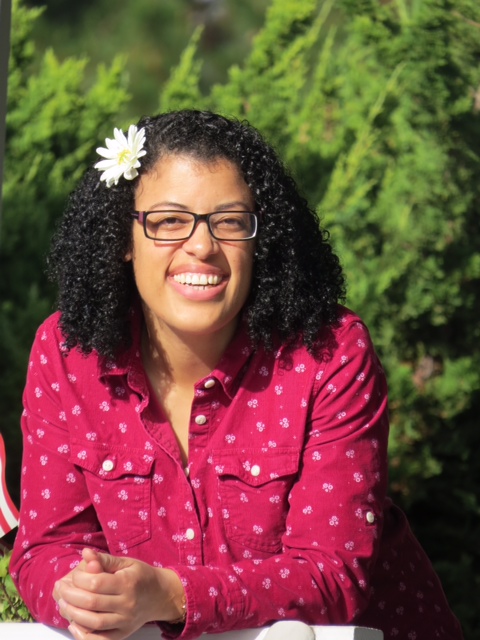 Shannon Luders-Manuel is a native of the Bay Area in central California and lived her first two years on San Francisco’s famously diverse Haight Street with her black father from Missouri and white mother from Marin County, California. She received her Master’s degree in English Literature from the University of Massachusetts Amherst, where she focused on identity formation and the role of the white suitor in the “tragic mulatta” narrative. Shannon was a founding member of the all-inclusive Meetup group “Sisters and White Misters” located in Alameda, California, and is proud of her multiracial extended family which includes spouses and partners with ethnicities from around the globe. Shannon’s previous literary works include a postcolonial analysis of the Elizabeth Smart kidnapping case in Vanderbilt University’s online academic journal, AmeriQuests. She is currently working on a memoir entitled Hambone about her relationship with her deceased father.
Diversity Consciousness: Opening Our Minds to People, Cultures, and Opportunities
There is truth to the adage, "Good things come to those who wait."
An article I got published on Teaching Tolerance magazine's website has shown up on many other diversity websites throughout the years, and has now made it into a textbook published by Pearson.

I look forward to purchasing this book in the very near future and seeing what other gems it holds.
~Shannon Luders-Manuel
An article I got published on Teaching Tolerance magazine's website has shown up on many other diversity websites throughout the years, and has now made it into a textbook published by Pearson.
I look forward to purchasing this book in the very near future and seeing what other gems it holds.
~Shannon Luders-Manuel
Tuesday, May 20, 2014
What My Mother Has Taught Me
It's been almost a year since my second most recent post, "What My Father Taught Me." As a reintroduction to my blog, it seems appropriate to follow it up with a tribute to my mother, just a little shy of Mother's Day and the 2nd anniversary of her successful brain surgery.

1. Beauty is everywhere.
Many women, including myself, notice man-made, artificial objects of beauty. My mother, however, never seems to notice these things. Instead, she sees every individual flower, bird, and tree on any walk she ever takes. Taking walks with my mother can be painfully slow due to these sightings, but her mesmerization and wonder at the beauty of nature inspires me to look past the pretty buildings and pretty clothes and see the tiny little blue flower peeking up from the cracked sidewalk.
2. Disability doesn't determine capability.
My mom was born with a cleft lip and palate, and in the 50s, surgeries weren't as streamlined as they are today. As a result, my mother grew up with highly visible imperfections on her face, and children and adults alike assumed these imperfections affected her mental capabilities. In reality, my mother was the only one of her siblings to earn a Master's degree. She taught me not only to see people for their insides, but also to embrace their outsides just the way they are. I therefore naturally gravitated towards peers who were somehow different, because to me, they were just as normal as anyone else.
3. Don't be afraid to cry.
When my mother was sad, she cried, and from a young age I learned that this was a natural expression of one's emotions. She never once told me not to cry, and this freedom has allowed me to be sympathetic toward others when they're feeling down.
4. Books are a girl's best friend.
My mom still gets lost in a good book, to the point where everything around her fades away. After having received my Master's in English literature, it's hard to enjoy the simple pleasure of reading purely for reading's sake, but I'm determined to recultivate this pasttime with the vigor that my mom has never lost.
5. There is nothing wrong with waiting in line.
My mom is an incredibly patient person. I have rarely seen her honk her horn out of frustration or get irritated by having to wait in line at a grocery store. She takes these inconveniences in stride, knowing that an extra thirty seconds is nothing to get worked up about.
6. The grass never greener on the other side.
My mother has never expressed a wish to have someone else's house, job, car, or, well, life. She exudes contentment with everything, as if existence itself is a gift that has been bestowed upon her and not to be taken for granted.
1. Beauty is everywhere.
Many women, including myself, notice man-made, artificial objects of beauty. My mother, however, never seems to notice these things. Instead, she sees every individual flower, bird, and tree on any walk she ever takes. Taking walks with my mother can be painfully slow due to these sightings, but her mesmerization and wonder at the beauty of nature inspires me to look past the pretty buildings and pretty clothes and see the tiny little blue flower peeking up from the cracked sidewalk.
2. Disability doesn't determine capability.
My mom was born with a cleft lip and palate, and in the 50s, surgeries weren't as streamlined as they are today. As a result, my mother grew up with highly visible imperfections on her face, and children and adults alike assumed these imperfections affected her mental capabilities. In reality, my mother was the only one of her siblings to earn a Master's degree. She taught me not only to see people for their insides, but also to embrace their outsides just the way they are. I therefore naturally gravitated towards peers who were somehow different, because to me, they were just as normal as anyone else.
3. Don't be afraid to cry.
When my mother was sad, she cried, and from a young age I learned that this was a natural expression of one's emotions. She never once told me not to cry, and this freedom has allowed me to be sympathetic toward others when they're feeling down.
4. Books are a girl's best friend.
My mom still gets lost in a good book, to the point where everything around her fades away. After having received my Master's in English literature, it's hard to enjoy the simple pleasure of reading purely for reading's sake, but I'm determined to recultivate this pasttime with the vigor that my mom has never lost.
5. There is nothing wrong with waiting in line.
My mom is an incredibly patient person. I have rarely seen her honk her horn out of frustration or get irritated by having to wait in line at a grocery store. She takes these inconveniences in stride, knowing that an extra thirty seconds is nothing to get worked up about.
6. The grass never greener on the other side.
My mother has never expressed a wish to have someone else's house, job, car, or, well, life. She exudes contentment with everything, as if existence itself is a gift that has been bestowed upon her and not to be taken for granted.
Friday, November 8, 2013
DIY Cost-Cutting Haircuts
Lately I've been short on cash, so I've been doing what I can to cut costs. One of those cuts has been literal. After a full year of postponing a haircut until "the next paycheck," a few days ago I took matters--and scissors--into my own hands.
Following the growing advice of mixed race self-taught hair gurus, I've been putting my hair in about 10 to 15 twists each night, securing each with a hairband. Despite non-mixies assuming the twists create the curl, we mixies know the twists help keep our rebellious strands from turning into dreadlocks. On this particular evening, I grabbed my hair cutting sheers, usually reserved for "fairy knots," and cut the scraggly inch off of each twist below the hairband. This took all of five minutes, if that.
Granted, because my hair was in its twists, I had no idea if my self-grooming would turn out to be successful. But luckily, the next morning when I undid the twists, added my usual touch of water and my large touch of conditioner, those perfect curls sprang into a perfect line across my back. Success!
Now, I would be a fool to suggest that anyone follow my example unless, like me, they feel the risk is worth the possible blunder. But, as my mom says my grandma says, "Curly hair hides a multitude of sins," one being the "sin" of the hasty, unprofessional DIY.
Side note: Always angle your scissors as you cut.
Following the growing advice of mixed race self-taught hair gurus, I've been putting my hair in about 10 to 15 twists each night, securing each with a hairband. Despite non-mixies assuming the twists create the curl, we mixies know the twists help keep our rebellious strands from turning into dreadlocks. On this particular evening, I grabbed my hair cutting sheers, usually reserved for "fairy knots," and cut the scraggly inch off of each twist below the hairband. This took all of five minutes, if that.
Granted, because my hair was in its twists, I had no idea if my self-grooming would turn out to be successful. But luckily, the next morning when I undid the twists, added my usual touch of water and my large touch of conditioner, those perfect curls sprang into a perfect line across my back. Success!
Now, I would be a fool to suggest that anyone follow my example unless, like me, they feel the risk is worth the possible blunder. But, as my mom says my grandma says, "Curly hair hides a multitude of sins," one being the "sin" of the hasty, unprofessional DIY.
Side note: Always angle your scissors as you cut.
 |
| Okay, so this obviously isn't a real photo, but you get the idea, courtesy of bitstrips.com |
Friday, June 22, 2012
What My Father Taught Me
June marks Father's Day, Loving Day, Juneteenth, and my dad's birthday. All of these special days remind me of my father, who passed away eleven years ago at the age of 71. Just like everyone, my father had demons, challenges, and setbacks. What he also had was an innate awareness of human interactions and a philosophical depth always two steps beyond his years. He was also wise, proud, stubborn, and loved his little girl to pieces.

Here, in no particular order, is what my father taught me:
1. Make copies of everything.
While this advice may be pretty obvious, it's served me well over the years. I make copies of all documents and forms before sending them to their recipients. If I need my tax information from 7 years ago or a bill from 7 months ago, I know just where to look.
2. It's better to have something and not need it than to need something and not have it.
I remind myself of this favorite line of his whenever I question whether to grab my coat, sweater, scarf, etc., before I head out the door.
3. Follow politics.
My dad knew everything -- or at least it seemed that way to me. He read law books and studied history and watched the news. He knew that I, as a black female, would be affected by politics, and that knowledge is the best weapon a person can have.
4. Don't drink the Kool Aid.
My dad knew ahead of time that Jim Jones was going to do something horrible both to and with his cult followers. He has taught me to question everything, no matter how innocuous it might seem to be.
5. Blacks should support gay rights just as much as they supported the Civil Rights movement.
In 1993, a gay student at my California high school wasn't allowed to bring his partner to the school dance without a fight; but my dad already understood that his own gay neighbors should be awarded the same respect that blacks had struggled to obtain in the 60s.
6. Have no regrets.
I could tell my father had regrets as he lay dying. The most important thing he's taught me is to have confidence, fight for what I believe in, and never take a single day for granted. Dad, this one's for you.

Here, in no particular order, is what my father taught me:
1. Make copies of everything.
While this advice may be pretty obvious, it's served me well over the years. I make copies of all documents and forms before sending them to their recipients. If I need my tax information from 7 years ago or a bill from 7 months ago, I know just where to look.
2. It's better to have something and not need it than to need something and not have it.
I remind myself of this favorite line of his whenever I question whether to grab my coat, sweater, scarf, etc., before I head out the door.
3. Follow politics.
My dad knew everything -- or at least it seemed that way to me. He read law books and studied history and watched the news. He knew that I, as a black female, would be affected by politics, and that knowledge is the best weapon a person can have.
4. Don't drink the Kool Aid.
My dad knew ahead of time that Jim Jones was going to do something horrible both to and with his cult followers. He has taught me to question everything, no matter how innocuous it might seem to be.
5. Blacks should support gay rights just as much as they supported the Civil Rights movement.
In 1993, a gay student at my California high school wasn't allowed to bring his partner to the school dance without a fight; but my dad already understood that his own gay neighbors should be awarded the same respect that blacks had struggled to obtain in the 60s.
6. Have no regrets.
I could tell my father had regrets as he lay dying. The most important thing he's taught me is to have confidence, fight for what I believe in, and never take a single day for granted. Dad, this one's for you.
Wednesday, May 23, 2012
You Know You Have Black Natural Hair When...
1. Your extra-strength hair bands don't last long.
2. You have a sweatshirt just for wearing while you comb out your hair.
3. You don't wash your hair for a date.
4. The longer you go before washing it again, the healthier it is.
5. Strangers respond to your hair as if it were a cute baby or a puppy.
6. When you book your stylist appointment you make sure she sets aside 3 hours just for you.
7. Your stylist often needs backup in order to get through your 3-hour appointment on time.
8. You laugh when your non-black female friend hands you her wire hairbrush.
9. You wouldn't need a wig to be Marge Simpson for Halloween.
10. Your hair works in the ratio of miles to inches: Miles of straight = inches of curly.
11. Your nightly twists take a full episode of [insert your favorite TV show here].
12. Caps and hats often don't fit your head.
13. An earring can get lost in your hair for hours before falling on the kitchen floor.
14. Your black friends insist that if they went natural their hair would never look like yours.
15. When your black friends do go natural it's like coming out of the closet -- liberating and tremendously exciting.
16. You have a facebook album dedicated solely to your natural hair journey, and this album gets the most responses.
17. You would consider spending $200 for an Ouidad cut.
18. You and female strangers bond over your mutual "awkward childhood afro phase" and "chemically-treated singed straight hair phase."
19. You wish Michelle Obama would go natural but understand why she can't.
20. You wouldn't have your hair any other way.
2. You have a sweatshirt just for wearing while you comb out your hair.
3. You don't wash your hair for a date.
4. The longer you go before washing it again, the healthier it is.
 |
| Photo courtesy of best-styles.net |
5. Strangers respond to your hair as if it were a cute baby or a puppy.
6. When you book your stylist appointment you make sure she sets aside 3 hours just for you.
7. Your stylist often needs backup in order to get through your 3-hour appointment on time.
8. You laugh when your non-black female friend hands you her wire hairbrush.
9. You wouldn't need a wig to be Marge Simpson for Halloween.
10. Your hair works in the ratio of miles to inches: Miles of straight = inches of curly.
11. Your nightly twists take a full episode of [insert your favorite TV show here].
12. Caps and hats often don't fit your head.
13. An earring can get lost in your hair for hours before falling on the kitchen floor.
14. Your black friends insist that if they went natural their hair would never look like yours.
15. When your black friends do go natural it's like coming out of the closet -- liberating and tremendously exciting.
16. You have a facebook album dedicated solely to your natural hair journey, and this album gets the most responses.
17. You would consider spending $200 for an Ouidad cut.
18. You and female strangers bond over your mutual "awkward childhood afro phase" and "chemically-treated singed straight hair phase."
19. You wish Michelle Obama would go natural but understand why she can't.
20. You wouldn't have your hair any other way.
Saturday, March 24, 2012
Elizabeth Smart and Trayvon Martin are 21st Century America's Children
America has a new national child: Trayvon Martin.
In 2002, sentiment over the Elizabeth Smart case reached a fever pitch during her abduction, which led to national representatives and countrymen alike viewing her not just one family's daughter, but America's daughter. The beautifully angelic Elizabeth stood as a symbol for all we needed to protect, and as an academic who's written about her case, I'm delighted about her upcoming wedding.
Trayvon's unnecessary death by homicide is the first national event surrounding the victimization of a child to gain so much media attention since Elizabeth's. Present Barack Obama has linked Trayvon to America in much the same way Elizabeth was when he says, "If I had a son he would look like Trayvon."
While both Elizabeth and Trayvon's experiences were tragic, I find comfort in knowing that Trayvon is receiving as much media attention as Elizabeth did. As a biracial American, Elizabeth resembles my own blonde sister and Trayvon looks just like a cousin I played with when I was young.
Almost exactly ten years after Elizabeth's abduction, we have a black president stating that his son would look like Trayvon, in much the same way former president Bush's daughter would look like Elizabeth.
While I can't speak for Elizabeth Smart, I'm sure she feels for Trayvon and, like much of the rest of America, wishes his unfortunate death can somehow change the national perception of what it means to be an American and the protection of life and liberty that each American deserves.
 |
| Photo courtesy of People.com |
Trayvon's unnecessary death by homicide is the first national event surrounding the victimization of a child to gain so much media attention since Elizabeth's. Present Barack Obama has linked Trayvon to America in much the same way Elizabeth was when he says, "If I had a son he would look like Trayvon."
 |
| Photo courtesy of blacksnob.com |
While both Elizabeth and Trayvon's experiences were tragic, I find comfort in knowing that Trayvon is receiving as much media attention as Elizabeth did. As a biracial American, Elizabeth resembles my own blonde sister and Trayvon looks just like a cousin I played with when I was young.
Almost exactly ten years after Elizabeth's abduction, we have a black president stating that his son would look like Trayvon, in much the same way former president Bush's daughter would look like Elizabeth.
While I can't speak for Elizabeth Smart, I'm sure she feels for Trayvon and, like much of the rest of America, wishes his unfortunate death can somehow change the national perception of what it means to be an American and the protection of life and liberty that each American deserves.
More Naturally Kinky Curly Hair Sightings
Sure, I'll admit it: Sometimes I read eHarmony advice columns. While I'm often disappointed in the quality of their articles, this one left me refreshed--both in content and in images. The very last page of the article, entitled "Ladies: What Men Think About Your Body," reinforced the notion that self-confidence and attitude are the biggest physical attributes a woman can possess. And what was the physical representation of this attribute? A woman my age sporting my exact hair--texture, color and all. (Not to mention the lavender shirt!) Finally, a sexiness I can truly get behind.

Saturday, December 31, 2011
Beautiful flower clips for Curly Hair
After my hair fiasco, my dear friend Isha sent me a wonderful collection of handmade flower pins and earrings that she makes and sells on Etsy. They come in many different colors and styles, and I've been matching each flower with my outfit of the day.
Get yours here:
Isha's Flower Garden

Get yours here:
Isha's Flower Garden

Monday, December 19, 2011
Will You Date My Hair?

I have no trouble rejecting men. I can usually tell within five minutes of a date if I'm going to like the guy or not. There's that instant chemistry (or lack thereof) that speaks volumes. If he's an hour late, that's one strike against him. If he forgets his wallet, that's another. If he pressures me to get into his car I know to run the other way, and if he wants me to drive an hour to his house on the second date with no plan other than coming over, I know not to get behind the wheel.
What's funny is that this confidence and intuition doesn't translate when I'm on a salon chair. I can pour out my sob story about how a previous stylist refused to do my hair or cut off uneven chunks at random, but every time I get in a new salon chair I'm convinced that this stylist will know exactly what to do. And it's not that I don't do my research. I just seem to be destined to have horrible stylists. Maybe they should make therapy sessions for people who have codependent relationships with stylists and who always seem to "choose the wrong one."
Last Tuesday I went to a new stylist. This was an inevitable change as I'd moved from the Pacific Northwest back to California. I found her salon on Yelp as one that got high recommendations for working with natural black hair. My first faux pas was in not making sure I got the stylist recommended on the site, but instead booked an appointment with the one who answered the phone.
 |
| After |
To make a long story short, I called her and she discovered that she wasn't supposed to put me under the dryer. She offered me a partial refund and a reconstructor treatment and then cancelled my treatment half an hour before it was scheduled because she wanted more sleep. Later that afternoon we each pulled up in front of her salon and I felt like I was in the middle of a drug deal as she handed me the cash. Once she saw my hair she insisted it was copper ("copper is orange, just like your [bright] orange sweater") and proclaimed my hair healthy even though it had been entirely sapped of natural oils and lay as dead on my head as if I had put my finger in a light bulb. (Yes, for kinky curly haired girls, "dead" does not mean flaccid.)
I took my partial refund to a Regis which is the chain of my previous stylist in Washington. I had her on the phone at the new salon, and my stylist said to run away as fast as I could, which I wasn't surprised about as the woman took one look at my hair and didn't want to have anything to do with it. Not because of the color but because my hair is so thick and curly. My stylist's sentiment was reinforced when the woman behind the counter lost my hair band, searched the entire salon and couldn't find one, and then tried to give me a rubber band instead. In a salon.
I'm reading tragic mulatta literature for a graduate class and so I'm immersed in mulattas who do not feel like they fit in either white or black society (though by the end they often choose black). I'd like to say that this double-consciousness is long gone, only, through my discussions with other mixed-race women--and black women who have decided to go natural--we're finding that there is almost no one out there who is willing or able to touch our hair. I for one I have decided that I will give myself a haircut, and that the only other person I'll entrust with scissors is my Washington stylist when I next go up for a visit. She is the only white person who will cut my hair (yes, I've been turned away that many times!) and black stylists always fry it to pieces because that's they only way they know how to deal with their own hair.
After a period of being worried that I would have to chop off my mane and start all over, home care, a well-placed hair wrap and a little bit of patience looks like it will slowly bring my hair back to a normal state. As for my mentality, stylists will now have to meet me, woo me, and prove their worth before I'll hand myself over.

Sunday, July 17, 2011
How to talk to your mixed race friend, family member, or stranger
With America becoming increasingly diverse, there is a growing need for education about proper etiquette when approaching the topic of race with a mixed race contact. I myself have many white friends and family members who struggle to find appropriate and politically correct terminology when discussing race with me. I know their fumbling comes out of a genuine desire to bridge the racial gap and assert their acceptance of me and other mixed race individuals. Below is a crash course in what -- and what not -- to say.

1. Don't ask: "What are you?"
Many mixed race individuals including myself will be offended by this question. While the question itself comes from a place of natural curiosity, the way it is worded implies that the person in question is somehow subhuman or defined entirely by his or her race.
Many mixed race individuals (also including myself) love this question when worded this way. Are we being nit-picky? Maybe. But unless you're a minority yourself, you represent the majority and we represent the "Other." In general we love to celebrate our otherness with those who are genuinely interested and who show that they view us positively through the way they ask.
Caveat: Some mixed race individuals don't like this question at all, so the guideline above only works on a case by case basis.
2. Don't say: "You're beautiful because you're exotic."
Again, such a statement may make us feel subhuman and more like an animal in a zoo. We don't want to be beautiful because of the way we differ from whites. Rather, we want to be beautiful of our own accord, and we believe a white person can be just as good looking as we are. In fact, if we are part white ourselves, saying we're beautiful because we're exotic means that half of our ethnic makeup is not beautiful.
Who doesn't like to be told they're beautiful? This statement is sure to flatter the receiver and you can steer clear of race talk completely.
Caveat: Some mixed race individuals do love to be noticed for their exoticism, so again, I can't speak for everyone.
3. Don't say: "I'm color-blind" or "I don't see color."
Mixed race individuals don't like this statement because we can't relate. We see color every single day, there is no way around it. We notice the one black student in the class, or the one Asian student at the party. We notice the races of all the characters in every TV show or movie, of every person in every commercial, and in every magazine ad. We don't notice these things because we are obsessed with race. Rather, because of growing up as an "Other," there is no way for us not to notice the races of those around us.
Even "I love every color of the rainbow" or "I appreciate everyone's differences" can be taken as an insult. Why? Because like it or not, every single human being has prejudice inside them, even us. We should all fight against it, of course, but not being at all affected by race isn't possible.
4. Don't say: "African-American."
Once upon a time, African-American was politically correct. Much in the same way that homosexual was the PC term over gay. However, just as gays have taken back their original definer, so have blacks. African-American is now passe, because it's an irrelevant definition. After all, we don't call whites European-American, and many of us have ethnic roots in America that go all the way back to the 1600s.
Remember the Black is Beautiful movement of the 60s? Well it's back.
Caveat: The plural of "black" is most often "black people," not "blacks." And especially not "the blacks." Again, this may be a nit-picky criteria, but no one wants to pull a Donald Trump and say "I have a great relationship with the blacks." We're not one unit, we are all individuals.
Mixies: What rules of etiquette do you have to contribute? Are there any here that you disagree with?
--Shannon Luders-Manuel

1. Don't ask: "What are you?"
Instead ask: "What is your ethnicity / ethnic makeup," etc.
Many mixed race individuals (also including myself) love this question when worded this way. Are we being nit-picky? Maybe. But unless you're a minority yourself, you represent the majority and we represent the "Other." In general we love to celebrate our otherness with those who are genuinely interested and who show that they view us positively through the way they ask.
Caveat: Some mixed race individuals don't like this question at all, so the guideline above only works on a case by case basis.
2. Don't say: "You're beautiful because you're exotic."
Again, such a statement may make us feel subhuman and more like an animal in a zoo. We don't want to be beautiful because of the way we differ from whites. Rather, we want to be beautiful of our own accord, and we believe a white person can be just as good looking as we are. In fact, if we are part white ourselves, saying we're beautiful because we're exotic means that half of our ethnic makeup is not beautiful.
Instead say: "You're beautiful."
Who doesn't like to be told they're beautiful? This statement is sure to flatter the receiver and you can steer clear of race talk completely.
Caveat: Some mixed race individuals do love to be noticed for their exoticism, so again, I can't speak for everyone.
3. Don't say: "I'm color-blind" or "I don't see color."
Mixed race individuals don't like this statement because we can't relate. We see color every single day, there is no way around it. We notice the one black student in the class, or the one Asian student at the party. We notice the races of all the characters in every TV show or movie, of every person in every commercial, and in every magazine ad. We don't notice these things because we are obsessed with race. Rather, because of growing up as an "Other," there is no way for us not to notice the races of those around us.
Rather say: Nothing. There's really no PC equivalent to this statement. Just avoid it!
Even "I love every color of the rainbow" or "I appreciate everyone's differences" can be taken as an insult. Why? Because like it or not, every single human being has prejudice inside them, even us. We should all fight against it, of course, but not being at all affected by race isn't possible.
4. Don't say: "African-American."
Once upon a time, African-American was politically correct. Much in the same way that homosexual was the PC term over gay. However, just as gays have taken back their original definer, so have blacks. African-American is now passe, because it's an irrelevant definition. After all, we don't call whites European-American, and many of us have ethnic roots in America that go all the way back to the 1600s.
Instead say: "black."
Remember the Black is Beautiful movement of the 60s? Well it's back.
Caveat: The plural of "black" is most often "black people," not "blacks." And especially not "the blacks." Again, this may be a nit-picky criteria, but no one wants to pull a Donald Trump and say "I have a great relationship with the blacks." We're not one unit, we are all individuals.
Mixies: What rules of etiquette do you have to contribute? Are there any here that you disagree with?
--Shannon Luders-Manuel
Saturday, July 9, 2011
Catalog Models with Natural Hair
I've noticed a pattern in my online shopping habits. If a black woman is wearing a particular item of clothing, it makes me pay more attention to it. And if she has natural hair, I get a warm fuzzy feeling inside my chest like I am not a freak of nature but a catalog-worthy beauty, wild mane and all.
Here are some examples of natural beauties rocking the pages of online catalogs.
Well, catalog world, it's a start! Do any of my readers have more naturally nappy model findings to share?
-- Shannon Luders-Manuel
Here are some examples of natural beauties rocking the pages of online catalogs.
 |
| Check out this Venus vixen. So chic! |
 |
| I first noticed this model a couple years ago and wrote Gap a big thank you! |
 |
| Light skinned and still able to embrace her literal roots for Nordstrom. Sweet! |
 |
| Forever 21 has this fierce model on its front page, though I can't find her actually modeling anything. |
Well, catalog world, it's a start! Do any of my readers have more naturally nappy model findings to share?
-- Shannon Luders-Manuel
Saturday, June 11, 2011
Should you get strabismus surgery?
I'm going to deviate from my normal topic for a moment and discuss my rare eye condition, as I know there are others out there like me who look for information about it on the internet. Here's my story, in completely lay terms:
I was born with Duane's syndrome (my right eye can't look to the right or to the left). I used an eye patch briefly when I was a kid and wore special glasses to help make the eye stronger.
I was born with both eyes able to look straight ahead when my head was faced straight ahead. As I got older, I had to turn my head increasingly to the left in order for my eyes to line up and work together. If I didn't turn my head, one eye would be focused on the object in front of me and the other would be off doing its own thing. For the most part I didn't notice it. It happened so gradually that it had just become second nature to me. But as you can see, over the years it had become pretty severe:
I conversed this way, read this way, and even drove this way. A couple years ago I went to a top medical school and had surgery to correct the strabismus. It was a Children's Hospital, as strabismus affects mainly children, but the surgeons there will of course fix the problem at an age. I was put under general anesthesia and my pupils were sutured and pulled into a correct position.
While I am for the surgery and not against it, here's some information you'll want to know ahead of time to help make your decision and to make sure you have the best recovery possible:
Hope this helps!
--Shannon Luders-Manuel
I was born with Duane's syndrome (my right eye can't look to the right or to the left). I used an eye patch briefly when I was a kid and wore special glasses to help make the eye stronger.
I was born with both eyes able to look straight ahead when my head was faced straight ahead. As I got older, I had to turn my head increasingly to the left in order for my eyes to line up and work together. If I didn't turn my head, one eye would be focused on the object in front of me and the other would be off doing its own thing. For the most part I didn't notice it. It happened so gradually that it had just become second nature to me. But as you can see, over the years it had become pretty severe:
 | |
| Looking "straight ahead" |
While I am for the surgery and not against it, here's some information you'll want to know ahead of time to help make your decision and to make sure you have the best recovery possible:
- Don't take any Ibuprofen for a week before the surgery as it acts as a blood thinner.
- After the sutures are in place, you will be asked to wake up and wait for the anesthesia to wear off, and then the opthamologist adjusts the sutures as necessary.
- As you're coming out of the anesthesia, it will take awhile to be able to open your eyes, and if they put a breathing tube down your throat, you may have a hard time talking at first.
- If it's too painful to get the sutures adjusted while you're awake, it's possible for the anesthesiologist to put you back under for the surgeon to complete the procedure.
- There will be a lot of post-op bleeding (bloody tears) that may take several days to go away.
- Your eyes may feel sandpapery for several days.
- If the sandpaper feeling doesn't go away after a couple of weeks, you may need to go in to get the exposed end of the suture trimmed, which is not painful.
Hope this helps!
--Shannon Luders-Manuel
 |
| Post-op |
Tuesday, June 7, 2011
The Garnier Girls
Is it just me, or do the women of Garnier Fructis commercials have better hair before they "use the product"? Here is an example, not of one I've seen on TV, but of one I found on youtube:
We seem to have two parallel trends going on right now in fashion. One is a continuation of straight haired women being pressured to iron their hair even straighter, and the other is a comeback of big hair on the trendsetting platform of the runway. Granted, neither straight hair nor curly hair is better than the other. But in my opinion Garnier would be better off to show women with a lot more distressed hair in their "before" footage. Healthy hair, like a healthy body, should always be the goal no matter what form it comes in.
Women of the world: let's celebrate our curls!
--Shannon Luders-Manuel
We seem to have two parallel trends going on right now in fashion. One is a continuation of straight haired women being pressured to iron their hair even straighter, and the other is a comeback of big hair on the trendsetting platform of the runway. Granted, neither straight hair nor curly hair is better than the other. But in my opinion Garnier would be better off to show women with a lot more distressed hair in their "before" footage. Healthy hair, like a healthy body, should always be the goal no matter what form it comes in.
Women of the world: let's celebrate our curls!
--Shannon Luders-Manuel
Saturday, April 30, 2011
I Support Elizabeth Smart
The following article of mine was reprinted without my permission and I don't endorse or support the blogger's theories on Elizabeth Smart:
Who is more disturbed: Gerry McCann or Ed Smart?
CAPTIVE AMERICA: SMART, ROWLANDSON AND THE COLONIAL SENTIMENT
Shannon Luders-Manuel
I'm posting my statement here because there is no way to contact the blogger or to post comments on her site. Elizabeth, I am so very sorry for what happened to you and that there are those who claim your abduction was all a propagandist scam. My article in no way supports that theory.
The original can be viewed on Vanderbilt's website, here:
AmeriQuests, Vol 7, No 1 (2010)

-- Shannon Luders-Manuel
Who is more disturbed: Gerry McCann or Ed Smart?
CAPTIVE AMERICA: SMART, ROWLANDSON AND THE COLONIAL SENTIMENT
Shannon Luders-Manuel
I'm posting my statement here because there is no way to contact the blogger or to post comments on her site. Elizabeth, I am so very sorry for what happened to you and that there are those who claim your abduction was all a propagandist scam. My article in no way supports that theory.
The original can be viewed on Vanderbilt's website, here:
AmeriQuests, Vol 7, No 1 (2010)

-- Shannon Luders-Manuel
Subscribe to:
Posts (Atom)